
Battery Backup for Hurricanes: A Florida Homeowner’s Guide
Hurricane season is part of living in Florida. While homeowners can prepare with shutters, supplies, and emergency plans, one important question remains: What happens when the power goes out?
For many Florida homeowners, losing electricity means more than sitting in the dark. Air conditioning stops working, refrigerators begin warming, internet service goes offline, security equipment may lose power, and essential devices become difficult to keep charged.
A battery backup for hurricanes can provide another level of preparedness by automatically supplying stored electricity when utility power is unavailable.
For homeowners throughout Sarasota and Southwest Florida, modern battery systems are becoming an increasingly attractive alternative to relying exclusively on portable or standby generators.
What Is a Home Battery Backup System?
A home battery backup system stores electricity so it can be used later.
During normal conditions, the battery remains connected to your home’s electrical system and maintains stored energy according to its configuration. When utility power is interrupted, properly designed backup equipment isolates the home from the grid and begins supplying electricity from the battery.
The process is automatic.
Homeowners don’t have to pull a generator out of the garage, run extension cords, search for gasoline, or manually start equipment in the middle of a storm.
Depending on the system design, battery backup can power selected essential circuits or provide much broader backup coverage throughout the home.
Why Battery Backup Makes Sense During Florida Hurricanes
Florida outages can happen quickly.
High winds, falling trees, lightning, flooding, and damage to utility infrastructure can interrupt electrical service during severe weather. Even after the storm passes, restoring power throughout affected areas can take time.
Battery storage gives homeowners a source of electricity located directly at their property.
That can help keep important equipment operating while the utility grid is unavailable.
More importantly, when battery storage is paired with a compatible solar system, the home may be able to produce additional energy while the grid remains down.
That creates an important distinction between simply storing electricity and having the ability to generate more of it at home.
What Can a Home Battery Run During an Outage?
The answer depends on the size and design of the battery system.
Some homeowners only want to protect essential loads such as:
- Refrigerator and freezer
- Lights
- Internet and Wi-Fi
- Security equipment
- Selected outlets
- Fans
- Garage door equipment
- Medical devices
Other homeowners want considerably more backup capability, including air conditioning, kitchen appliances, pumps, and other major electrical loads.
This is why battery systems should be designed around the individual home.
A system intended to maintain a refrigerator and several essential circuits is very different from one expected to provide whole-home backup during an extended outage.
Can Battery Backup Run Your Air Conditioner?
Potentially, but air conditioning is one of the most important loads to consider when designing a Florida backup system.
Central air-conditioning equipment can require substantial power, particularly when the compressor starts.
Whether a battery system can operate your air conditioner depends on the equipment’s electrical demand, battery output capability, system configuration, and other loads operating simultaneously.
It isn’t enough to simply ask whether a battery has enough stored energy. The system also needs to be capable of delivering the necessary power when the equipment requires it.
For Florida homes, HVAC requirements should be discussed early in the battery design process.
How Long Will Home Battery Backup Last?
There isn’t a universal runtime.
Battery backup duration depends heavily on how much electricity the home is consuming.
A homeowner running only a refrigerator, lights, Wi-Fi, and a few outlets can potentially preserve stored energy much longer than someone attempting to operate air conditioning and numerous high-demand appliances continuously.
Factors affecting runtime include battery capacity, household consumption, number of batteries, solar production, weather conditions and which circuits are being backed up.
This makes energy management especially important during extended hurricane-related outages.
What Happens When the Battery Runs Out?
If a battery reaches its minimum available charge while the utility grid is still unavailable, backup loads will eventually lose power unless another source of electricity becomes available.
This is where combining solar with battery storage can become particularly valuable.
With a compatible system designed for backup operation, solar panels may be able to produce electricity during daylight hours while the grid remains unavailable.
Available solar energy can support household loads and potentially recharge the battery for later use.
Instead of beginning an outage with one fixed amount of stored electricity, homeowners may have an opportunity to replenish some of that energy each day.
Actual performance will depend on solar production, weather, system configuration, and household consumption.
Battery Backup vs. Generator During a Hurricane
Generators have long been used for hurricane preparation, and they remain a practical option for some homes.
However, batteries operate very differently.
Generators create electricity by consuming fuel. Batteries store electricity and deliver it when needed.
With battery backup, there is no combustion engine running outside the home. That means no gasoline or propane is required for normal battery operation, and there are no engine exhaust fumes.
Battery systems are also quiet during operation and generally require less routine mechanical maintenance than combustion-engine generators.
A generator can have advantages as well, particularly when extended runtime and a reliable fuel supply are priorities.
The best solution depends on the homeowner’s needs rather than assuming one technology is right for every property.
Do You Need Solar Panels for Battery Backup?
Not necessarily.
Certain home battery systems can operate without solar, depending on the equipment and installation.
However, solar changes what a battery system can potentially accomplish during an extended outage.
Without solar, the homeowner begins with a finite amount of stored electricity.
With solar and a compatible backup configuration, the property has an on-site source capable of generating additional electricity when sunlight is available.
For homeowners seeking greater energy independence rather than emergency power alone, combining solar and battery storage can provide a more complete solution.
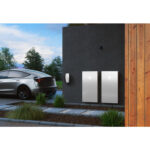
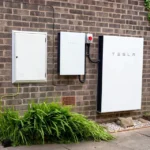
Tesla Powerwall for Hurricane Backup
Tesla Powerwall is one of the home battery options available for homeowners looking for automatic backup power and solar integration.
A properly designed Powerwall installation can detect a utility outage and provide stored electricity to the home’s backup system.
When integrated with solar, Powerwall can become part of a broader home energy system that generates, stores, monitors, and manages electricity.
For Florida homeowners, the value isn’t limited to hurricane season either. The system can remain part of the home’s everyday energy infrastructure throughout the year.
Should You Choose Essential-Load or Whole-Home Backup?
This is one of the most important decisions when designing a battery system.
Essential-load backup prioritizes the circuits you consider most important during an outage. This might include refrigeration, lighting, communications, security, and selected outlets.
Whole-home backup is designed to support significantly more of the home’s electrical system.
Neither approach is automatically better.
A homeowner who primarily wants hurricane preparedness may decide that keeping critical equipment operating for as long as possible is more important than powering everything normally.
Another homeowner may prioritize maintaining air conditioning and a more typical household routine during outages.
The system should be designed around those expectations.
Don’t Wait Until a Hurricane Is Approaching
Battery backup isn’t something homeowners should plan to install a few days before a major storm arrives.
A professional installation may involve system design, electrical evaluation, equipment availability, permitting, utility requirements, inspections, and installation scheduling.
Demand for generators, batteries, solar equipment, and electrical services can also increase dramatically when a storm threatens Florida.
Planning before hurricane season gives homeowners time to evaluate their options properly instead of making a rushed decision when a storm is approaching.
Prepare the Rest of Your Electrical System Too
Backup power is only one part of hurricane preparedness.
A professional electrical evaluation can also identify other areas worth addressing, including outdated electrical panels, insufficient capacity, aging equipment, surge protection, unsafe wiring, or electrical infrastructure that may complicate future solar and battery upgrades.
Homeowners planning EV charging, additional HVAC equipment, pool equipment, or other electrical upgrades should consider those future loads when designing their energy system.
A well-planned installation shouldn’t only solve today’s problem. It should also account for how the home’s electrical needs may change.
Why Choose Region Solar + Electric?
Region Solar + Electric helps homeowners throughout Sarasota and Southwest Florida prepare their homes with professionally designed solar, battery storage, Tesla Powerwall, EV charging, and electrical solutions.
Because battery backup involves both energy storage and the home’s electrical infrastructure, proper system design is just as important as choosing the battery itself.
The Region Solar + Electric team evaluates your home’s electrical system, energy consumption, backup priorities, existing solar equipment, and future energy needs before recommending a solution.
Whether you want to keep a few critical circuits operating or you’re exploring a more comprehensive whole-home energy system, the goal is to build around how you actually use electricity.
Get Your Home Ready Before the Next Outage
You can’t control when Florida’s next major storm will arrive, but you can decide how prepared your home’s electrical system will be when the grid goes down.
Battery storage can provide automatic, quiet backup power without requiring homeowners to depend solely on a fuel-powered generator. When paired with solar, it can also provide a way to produce additional energy at home during an extended outage.
Region Solar + Electric can evaluate your property and help determine whether battery backup, Tesla Powerwall, solar plus storage, or another configuration makes sense for your home.
Call (941) 355-6565 to schedule a consultation.