
Can Solar Panels Power Your Home During a Power Outage?
Can solar panels power your home during a power outage? It’s one of the most common questions homeowners ask when considering solar, and the answer often comes as a surprise: solar panels alone typically will not keep a standard grid-tied home powered when the utility grid goes down.
Your panels may still be capable of producing electricity while the sun is shining, but most traditional grid-tied solar systems are designed to automatically shut down during a utility outage.
For Florida homeowners dealing with hurricanes, severe thunderstorms, and unexpected grid outages, understanding this limitation is important. If keeping your home powered is one of your main reasons for going solar, adding battery storage can make a significant difference.
Here’s how solar works during an outage, why standard systems shut down, and how battery backup can help provide greater energy security.
Why Do Solar Panels Shut Down During a Power Outage?
It might seem strange that your solar panels can be sitting in full Florida sunshine while your home has no electricity.
The reason is safety.
Most residential solar systems are connected directly to the utility grid. During normal operation, your solar system works alongside that grid. Your home can use the electricity produced by your panels, while additional electricity can be supplied by the utility when needed.
If the utility grid goes down, however, a standard grid-tied solar inverter is designed to stop sending electricity into the system.
This helps protect utility workers who may be repairing damaged electrical lines. If solar systems continued sending electricity onto lines that utility workers expected to be de-energized, it could create an extremely dangerous situation.
This automatic shutdown is an important safety feature of grid-connected solar installations.
Does That Mean Solar Panels Are Useless During an Outage?
Not necessarily.
The key difference is whether your solar system includes equipment designed to provide backup power.
A traditional grid-tied solar installation primarily focuses on generating electricity and reducing how much energy your home needs to purchase from the utility.
A solar-plus-storage system adds another important component: a home battery.
Instead of relying exclusively on the utility grid when solar production changes, battery storage allows some of the electricity generated by your solar panels to be stored for later use.
When properly designed for backup operation, the system can isolate your home from the utility grid during an outage and use available battery energy to power designated loads or, depending on system size and design, much of the home.
How Does Solar Battery Backup Work?
During the day, your solar panels generate electricity whenever sufficient sunlight is available.
Your home uses the energy it needs first. Depending on the system configuration, additional solar production can then charge your battery.
The stored electricity can be used later when solar production is lower or when backup power is needed.
During a utility outage, a properly configured battery backup system detects the loss of grid power and separates the home’s backup electrical system from the utility.
The battery can then supply electricity to the circuits included in the backup design.
When sunlight becomes available, compatible solar equipment may also recharge the battery, potentially extending the amount of time your home can operate independently from the grid.
What Can a Solar Battery Power During an Outage?
This is where proper system design becomes extremely important.
There is no universal answer because every household uses electricity differently.
A homeowner primarily concerned with keeping essential equipment operating may prioritize:
- Refrigerators and freezers
- Interior lighting
- Internet and Wi-Fi
- Security systems
- Selected outlets
- Garage door equipment
- Medical equipment
- Fans and other essential devices
Another homeowner may want significantly more backup capacity for air conditioning, kitchen appliances, pumps, EV charging, or other high-demand equipment.
The amount of equipment you can operate depends on several factors, including battery capacity, instantaneous power requirements, the number of batteries installed, available solar production, and how the home’s electrical system is configured.
That is why backup systems should be designed around actual household energy needs rather than simply choosing a battery based on its nameplate capacity.
Can Battery Backup Power an Entire House?
Whole-home battery backup is possible for many properties, but the system must be sized appropriately.
A small home with efficient appliances may have very different requirements from a large property with multiple air-conditioning systems, a pool, electric water heating, an EV charger, and other significant electrical loads.
Sometimes the best solution is whole-home backup.
In other situations, creating an essential-load backup configuration can provide better value by prioritizing the equipment homeowners actually need during an outage.
Region Solar + Electric evaluates the home’s electrical infrastructure, energy consumption, existing solar equipment, and backup priorities before recommending a system configuration.
Why Battery Storage Makes Sense in Florida
Backup power has particular importance in Florida.
Hurricanes and tropical storms can damage utility infrastructure and cause outages ranging from brief interruptions to extended periods without grid power.
Battery storage provides homeowners with another layer of energy resilience.
Unlike a traditional generator, a battery doesn’t require gasoline or propane to produce electricity from stored energy. There is no combustion engine operating outside the home, and normal battery operation is quiet.
When battery storage is paired with solar, the combination can provide another major advantage: the potential to replenish stored energy when sufficient sunlight is available and the system is properly configured to operate during an outage.
That can be especially valuable when an outage lasts longer than expected.
Solar Battery Backup vs. Generator
Generators have provided emergency power for homes for decades, and they can still make sense for certain applications.
However, solar battery storage offers a different approach.
A generator creates electricity by consuming fuel. Battery storage holds electricity for later use and can integrate directly with a home’s solar energy system.
That means homeowners considering battery storage aren’t necessarily purchasing equipment that sits unused until the next hurricane. Depending on the system configuration and utility rate structure, the battery may participate in the home’s everyday energy management as well.
Battery systems also eliminate many of the concerns associated with storing fuel, exhaust, engine noise, and routine engine maintenance.
The right choice ultimately depends on the property, desired runtime, electrical loads, existing solar system, budget, and homeowner priorities.
Can You Add Battery Backup to Existing Solar Panels?
In many cases, yes.
Homeowners who already have solar don’t necessarily need to replace their entire system to gain backup capability.
However, compatibility needs to be evaluated carefully.
The existing inverter, electrical panel, solar equipment, system configuration, available installation space, and desired battery technology can all affect how an energy storage system should be added.
This is particularly important for homeowners whose original solar installer is no longer available or who purchased a home with an existing solar system.
An experienced solar and electrical contractor can evaluate the existing equipment and determine what options are appropriate.
What About Tesla Powerwall?
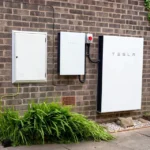
Tesla Powerwall is one of the battery storage solutions available to homeowners who want to combine solar generation with intelligent energy storage and backup power.
Powerwall stores electricity and can automatically provide backup energy when the grid goes down when installed as part of a properly configured system.
For homeowners building a broader Tesla Energy ecosystem, battery storage can also be incorporated alongside solar, home energy monitoring, and EV charging.
The important consideration isn’t simply purchasing a battery. The electrical system, solar production, household consumption, backup loads, and future energy needs should all be considered as part of the design.
Do You Need Solar to Install a Home Battery?
Not every battery installation necessarily requires solar.
Depending on the equipment and system design, a home battery can potentially be installed as a standalone backup solution.
However, combining battery storage with solar provides the ability to generate energy at the property rather than relying exclusively on stored electricity from the grid.
For homeowners whose primary goal is greater energy independence, solar and battery storage are therefore often considered together.
How Many Batteries Does Your Home Need?
There isn’t a single number that works for every Florida home.
Proper battery sizing should consider:
- Average electricity consumption
- Critical backup loads
- Air-conditioning requirements
- Desired backup duration
- Existing solar production
- Available electrical capacity
- Future EV charging
- Planned home improvements
For example, someone wanting to keep basic essentials operating during an outage may require a very different system from a homeowner expecting to maintain nearly normal household operation.
Installing more battery capacity isn’t automatically better, either. A professionally designed system should balance performance, capacity, electrical requirements, and budget.
Should You Add Battery Storage When Installing Solar?
If backup power is an important goal, it makes sense to discuss battery storage during the initial solar design process.
Planning the systems together allows the installer to consider solar production, battery capacity, electrical equipment, equipment placement, conduit routing, and future expansion as one integrated project.
Even if you aren’t ready to purchase battery storage immediately, discussing your future plans can help ensure the solar and electrical design doesn’t unnecessarily complicate an eventual battery installation.
That same principle applies to EV charging and smart electrical upgrades.
Homes are becoming increasingly electrified, so today’s solar installation should account for tomorrow’s energy demands whenever possible.
Solar Is About More Than Lowering Your Electric Bill
Reducing electricity costs remains one of the primary reasons homeowners consider solar, but modern home energy systems can accomplish much more.
Solar panels generate energy.
Battery storage allows energy to be saved.
Smart energy equipment helps homeowners understand and control how that energy is used.
EV charging brings transportation into the same home energy ecosystem.
When these technologies are designed together, homeowners gain greater control over where their electricity comes from and how it is used.
For Florida homeowners, that can mean a home that isn’t just more energy efficient but also better prepared for disruptions to the electrical grid.
Why Choose Region Solar + Electric?
Region Solar + Electric provides residential solar, battery storage, Tesla Powerwall, EV charging, electrical upgrades, and smart energy solutions throughout Sarasota and Southwest Florida.
As a locally owned and operated company, RSE approaches solar and battery projects from both the energy and electrical sides of the installation. That allows the team to evaluate the home’s existing infrastructure, current energy usage, backup requirements, and future plans before recommending a solution.
Rather than treating every property the same, the goal is to design a system that makes sense for the individual homeowner—whether that means grid-tied solar, essential-load battery backup, whole-home energy storage, or a more complete home energy ecosystem.
Ready to Make Your Home More Energy Resilient?
Solar panels can significantly reduce your dependence on utility electricity, but if staying powered during an outage is important to you, battery storage should be part of the conversation.
Region Solar + Electric can evaluate your home’s energy usage, existing electrical system, solar potential, and backup power goals to help determine what type of system makes sense for your property.
Whether you’re considering a new solar installation, adding battery backup to an existing system, or exploring Tesla Powerwall, you’ll receive recommendations based on your home’s actual energy needs—not a one-size-fits-all package.
Call (941) 355-6565 to speak with Region Solar + Electric or request a free consultation online.